

Fluid Biomarkers Facility
The BBRC Fluid Biomarkers Facility is a state-of-the-art platform dedicated to the discovery, development, validation and implementation of fluid biomarkers for neurodegenerative and age-related diseases. By combining advanced proteomics, ultra-sensitive immunodetection technologies and translational expertise, we support academic researchers, healthcare institutions and industry partners throughout the entire biomarker development pipeline.
Established in 2022 within the Barcelonaβeta Brain Research Center, the Facility provides access to cutting-edge analytical platforms and specialised scientific expertise across a wide range of biological matrices, including plasma, serum, cerebrospinal fluid (CSF), cell culture supernatants and tissue lysates, among others.
Supporting the complete biomarker journey: from discovery to clinical implementation
Our mission is to accelerate the translation of biomarker discoveries into tools that advance research, clinical trials and patient care. To achieve this, we offer end-to-end support across the full biomarker development pathway, described below.
The Facility occupies more than 100 m² of dedicated laboratory space and is equipped with a comprehensive portfolio of analytical technologies, including next-generation proteomics, ultra-sensitive digital immunoassays, multiplex immunodetection platforms and clinically oriented biomarker solutions. This integrated ecosystem enables us to address biomarker research, from exploratory discovery studies to regulatory-grade analytical validation.
As part of the BBRC research ecosystem, the Facility benefits from close interaction with multidisciplinary teams working in neurodegeneration, biomarker discovery, neuroimaging, clinical research and data science. Together with access to deeply phenotyped longitudinal cohorts and extensive expertise in Alzheimer’s disease and related disorders, this creates a unique environment for translational biomarker research and innovation.
What we offer
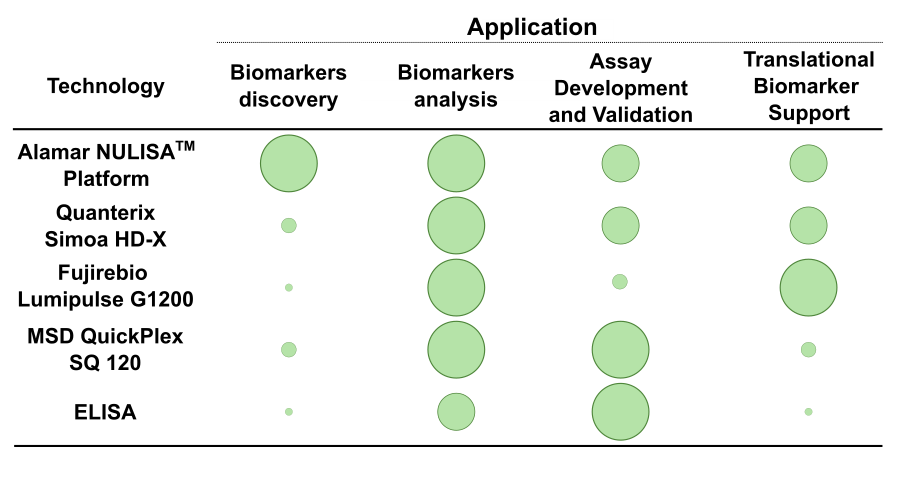
Biomarker Discovery
We support the discovery of novel protein biomarkers through next-generation ultra-sensitive proteomic technologies capable of profiling hundreds of proteins simultaneously from minimal sample volumes.
These approaches enable the identification of new biomarker candidates associated with disease mechanisms, progression, prognosis and treatment response, providing a strong foundation for translational research.
Biomarker Analysis
We provide quantitative measurement of protein biomarkers using ultra-sensitive and multiplex immunodetection technologies. Our platforms enable the reliable detection of low-abundance analytes with high precision and reproducibility across multiple biological matrices.
Assay Development and Validation
We support the design, optimisation and analytical validation of novel biomarker assays and multiplex panels tailored to specific research and translational needs.
Our expertise covers:
- Assay feasibility assessment
- Antibody pair screening and optimisation
- Assay transfer and adaptation
- Matrix validation
- Analytical performance evaluation
- Quality control implementation
- Standard operating procedure development
Translational Biomarker Support
The Facility provides scientific and technical support throughout the entire biomarker development pathway, helping bridge the gap between discovery research and clinical implementation. Our support includes:
- Biomarker candidate evaluation
- Proof-of-concept studies
- Longitudinal and cohort-based studies
- Clinical trial biomarker analysis
- Implementation of biomarker workflows in clinical and research environments
Why Collaborate With Us?
Our unique strength lies in the integration of biomarker discovery, assay development, validation and implementation within a single platform, backed by the cohorts, clinical networks and multidisciplinary expertise described above.
Whether supporting exploratory discovery projects, large-scale cohort studies, clinical trials or industry-sponsored programmes, we provide the same integrated, end-to-end support.
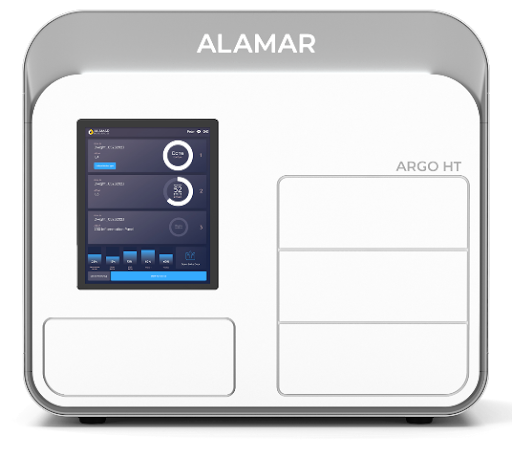
Alamar NULISA™ Platform – ArgoTMHT System
The Alamar NULISA™ platform represents a new generation of ultra-sensitive proteomic technologies designed for large-scale biomarker discovery and validation. By combining proprietary NULISA chemistry with next-generation sequencing (NGS) readout, the platform enables highly specific and sensitive quantification of hundreds of proteins simultaneously from small sample volumes.
The technology incorporates advanced background suppression strategies that significantly improve signal-to-noise ratios, enabling the reliable detection of low-abundance proteins that are often difficult to measure using conventional multiplex approaches.
NULISA is particularly well suited for biomarker discovery studies, molecular profiling, pathway analysis and the identification of novel disease-associated signatures in complex disorders such as Alzheimer’s disease and other neurodegenerative conditions (NULISA catalogue).
Key advantages:
- Simultaneous analysis of hundreds of proteins
- Ultra-high sensitivity and specificity
- Minimal sample volume requirements
- Excellent reproducibility and scalability
- Suitable for both discovery and validation studies
- NGS-based protein quantification
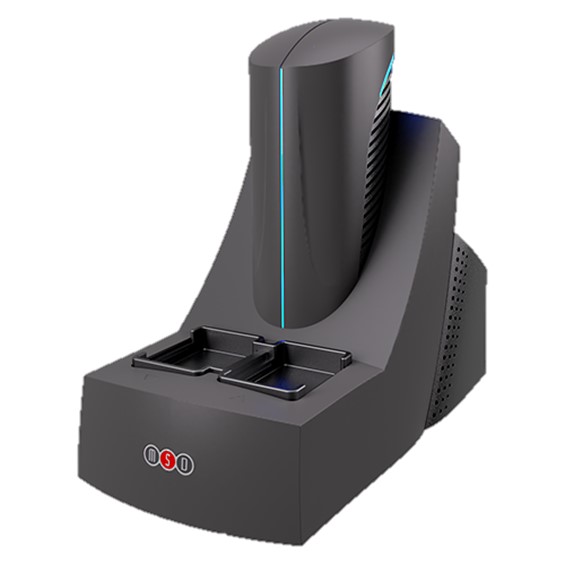
Meso Scale Discovery (MSD) QuickPlex SQ 120 and conventional ELISA
The MSD QuickPlex SQ 120 is an electrochemiluminescence-based immunoassay platform that combines high sensitivity, broad dynamic range and multiplexing capabilities.The technology allows simultaneous measurement of up to ten analytes within a single sample while maintaining excellent analytical performance and low sample consumption.
Its flexibility makes it an ideal platform for biomarker validation studies, pathway-focused research and multiplex protein profiling using MSD commercially available kits (MSD assay kits’ catalogue). In addition, it is a suitable alternative to conventional ELISA in assay development when enhanced sensitivity or multiplexing is required.
In addition to advanced automated platforms, the Facility provides conventional immunodetection services through validated ELISA. These technologies remain essential for assay development, orthogonal validation and targeted protein quantification across different biological matrices.
The Facility supports both commercially available and custom-developed assays and follows rigorous validation procedures to ensure robust analytical performance. Examples of available validated assays; PDGFRβ (plasma and CSF), Lipocalin-2 (LCN-2 / NGAL) (plasma and CSF), YKL-40 (plasma and CSF), TIMP2 (plasma), PF4 (plasma, serum), α-Klotho (plasma, serum, CSF).
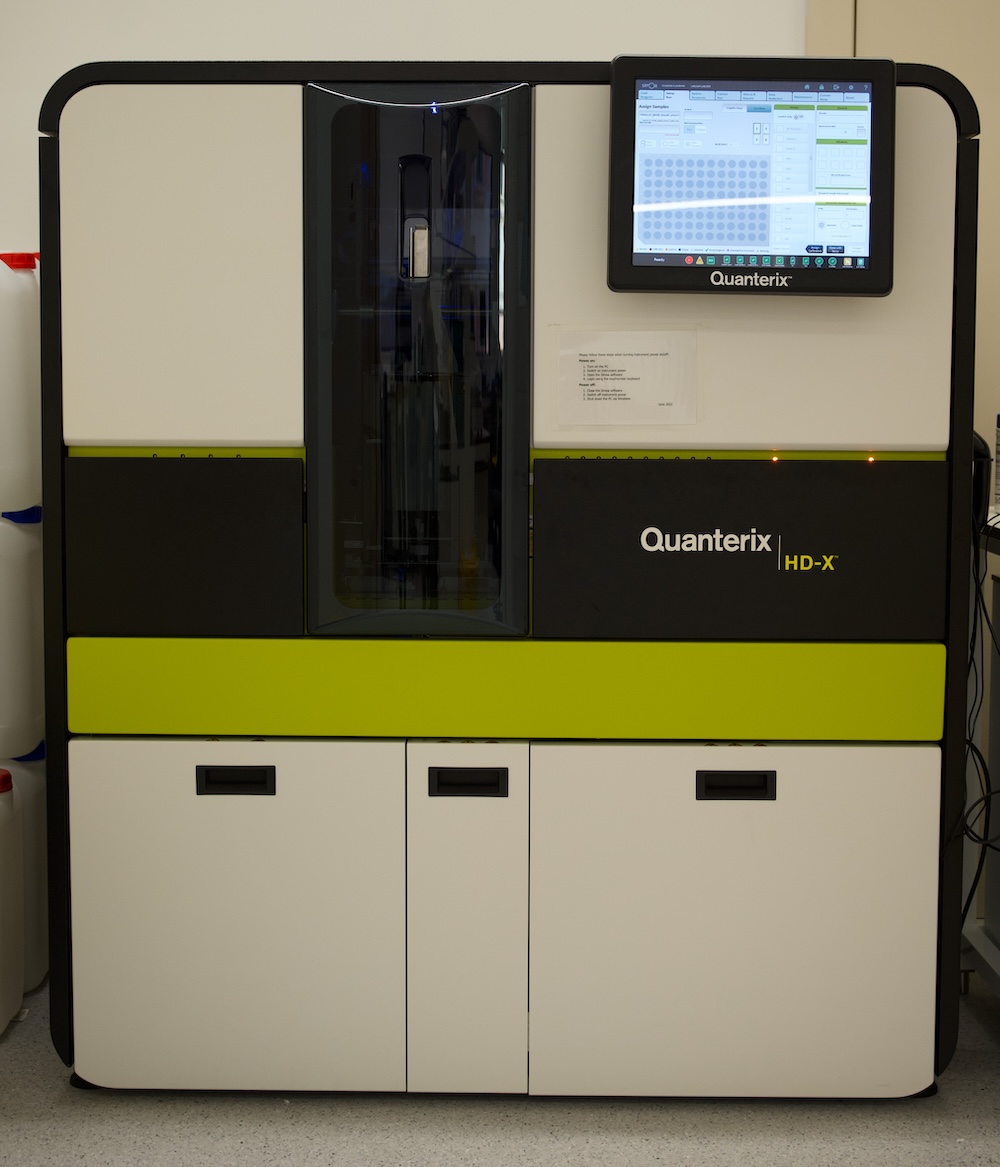
Quanterix Simoa HD-X®
The Quanterix Simoa HD-X® is a fully automated digital immunoassay platform based on Single Molecule Array (Simoa®) technology. By combining paramagnetic bead-based immunocapture with digital signal detection, the platform achieves biomarker quantification at femtomolar concentrations, providing sensitivities up to 1,000-fold greater than conventional immunoassays.
The platform supports both singleplex and multiplex analyses while requiring only minimal sample volumes. Its exceptional analytical sensitivity makes it particularly valuable for measuring low-abundance biomarkers in blood and cerebrospinal fluid.
Representative applications (Simoa HD-X assay kits’ catalogue) related to Alzheimer´s disease and neurodegeneration: pTau217, BD-Tau, pTau181, GFAP, NFL, Aβ40 and Aβ42, among others.
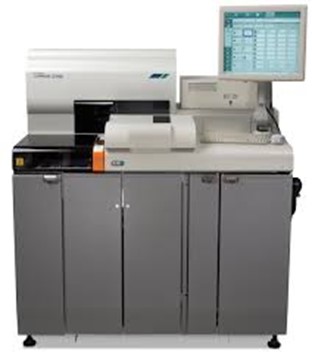
Fujirebio Lumipulse G1200
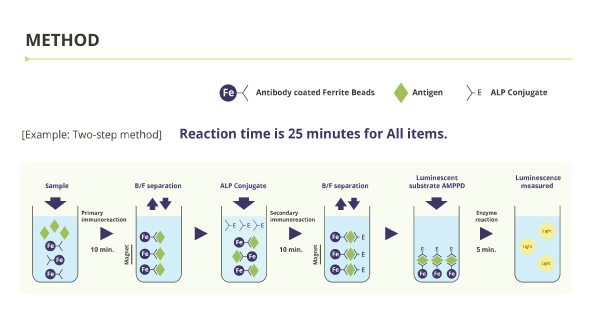
The Lumipulse G1200 is a fully automated chemiluminescent enzyme immunoassay (CLEIA) platform widely used in clinical laboratory settings.
The system combines high analytical performance with standardised workflows and clinically validated assays, facilitating the translation of biomarker research into routine clinical practice. Its growing portfolio of regulatory-approved biomarker assays makes Lumipulse an important bridge between biomarker discovery and clinical implementation.
Key applications (Fujirebio assay kits’ catalogue) related to Alzheimer´s disease and neurodegeneration: pTau217, pTau181, NFL, GFAP, Aβ40 and Aβ42, among others)










 @barcelonabeta.bsky.social