
05 Oct | 2026
An expedition into the brain at the PRBB’s 20th anniversary open day

We took part in OpenPRBB with an expedition into the brain and two interactive missions to understand the multifactorial nature of Alzheimer’s disease.
What do the cells that look after the brain do when something goes wrong? How do beta-amyloid and tau build up? And why can two people with different lifestyles have different risks of developing Alzheimer’s? We explored these questions, and many more, on 3 October at OpenPRBB, the Barcelona Biomedical Research Park’s (PRBB) open day.
For the third consecutive year, the Pasqual Maragall Foundation and the Barcelonaβeta Brain Research Center (BBRC) took part with a scientific mission: to take members of the public inside the brain and help them discover what happens in Alzheimer’s disease.
OpenPRBB is a well-established science engagement event in Barcelona. This year, as the PRBB celebrated its 20th anniversary, the open day adopted a new approach, with a more hands-on and participatory format than ever before, including laboratory tours, a scientific vermouth and other activities open to all audiences. Our workshop was part of the ‘Molecules and cells in action’ route, a 90-minute interactive journey through several PRBB laboratories, with our stop — the brain — bringing the route to a close.
Missions to understand Alzheimer’s
Under the title ‘Journey into the brain: explore a new dimension of Alzheimer’s’, we designed the workshop as a scientific expedition comprising two different interactive missions.
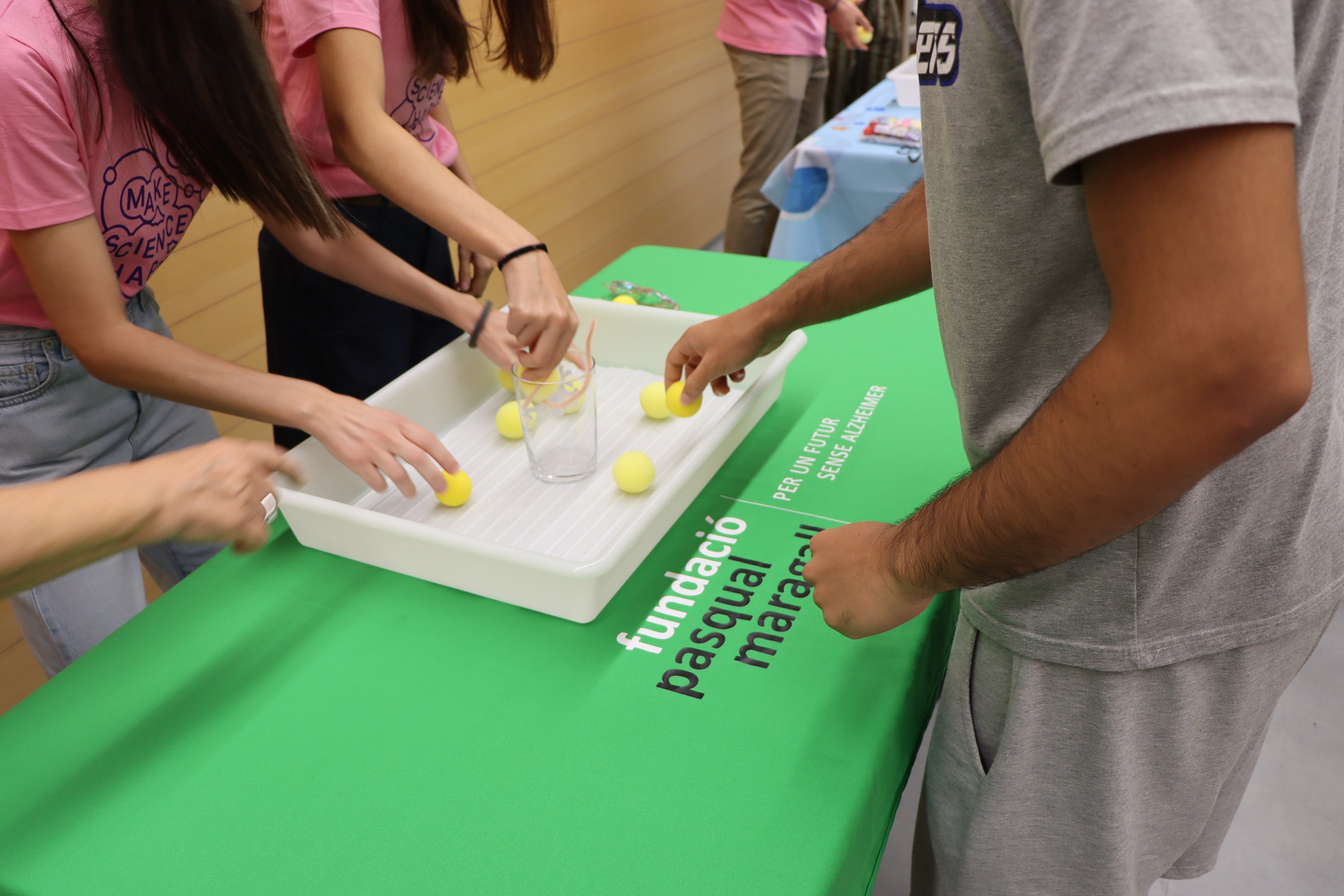
In the first mission, participants were introduced to the basic concepts behind neurodegenerative diseases. Through a participatory activity, they discovered how beta-amyloid and tau proteins build up in the brain and explored the role played by other key pieces of the puzzle, including astrocytes and microglia.
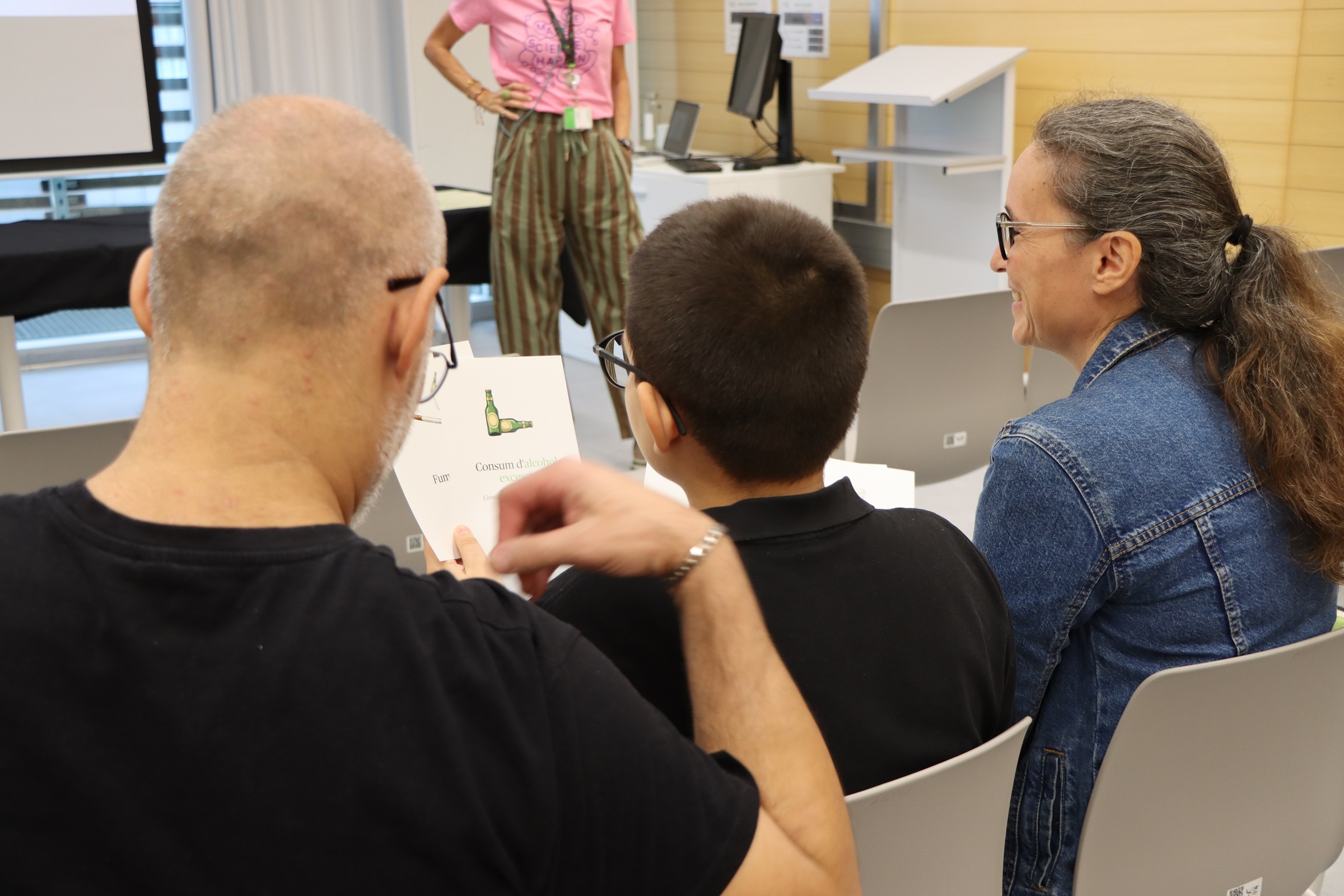
The second mission focused on a central concept in current research: Alzheimer’s is a multifactorial disease. Using cards featuring different profiles and lifestyle habits, participants explored how risk and protective factors interact. The journey ended with a true-or-false dice game to recap what they had learned and discuss some of the challenges that Alzheimer’s research still faces.
Throughout the morning, we welcomed four groups with whom we shared a clear objective: bringing science closer to society is also a way of looking after brain health, because understanding how the brain works is the first step towards protecting it.








 @barcelonabeta.bsky.social