28 Jan | 2026
Once again, we are taking part in the #científiques initiative

Group photo of the 8th #cientifiques edition
11F, the International Day of Women and Girls in Science, is approaching and, once again, the Fundació Catalana per a la Recerca i la Innovació (FCRI) and the Barcelona Institute of Science and Technology (BIST), with the collaboration of the Catalan Government are organising the #científiques event.
The initiative aims to make women’s essential role in science and technology more visible, create close, relatable female role models, and help reduce the gender gap in STEM studies. Despite progress in recent years, the data still show an uneven presence: girls tend to rule out scientific pathways from adolescence onwards, and women remain underrepresented in many technological and research disciplines. Projects such as #científiques seek to reverse this trend through local, high-impact actions directly in classrooms.
Yesterday, the #científiques gathering took place, a pre-11F event that included the participation of Dr Sandra Acosta, leader of BBRC’s Neurological Disease Models research group. During the day, she took part in the round table “Women scientists in the media”, moderated by Cristina Sáez, a science journalist and co-ordinator of the science section at Ara, alongside Pampa García Molina, science journalist and Director of Science Media Centre Spain, and Dr Anna Sanchez Vidal, Associate Professor and researcher in the Marine Geosciences research group at the UB’s Faculty of Earth Sciences.
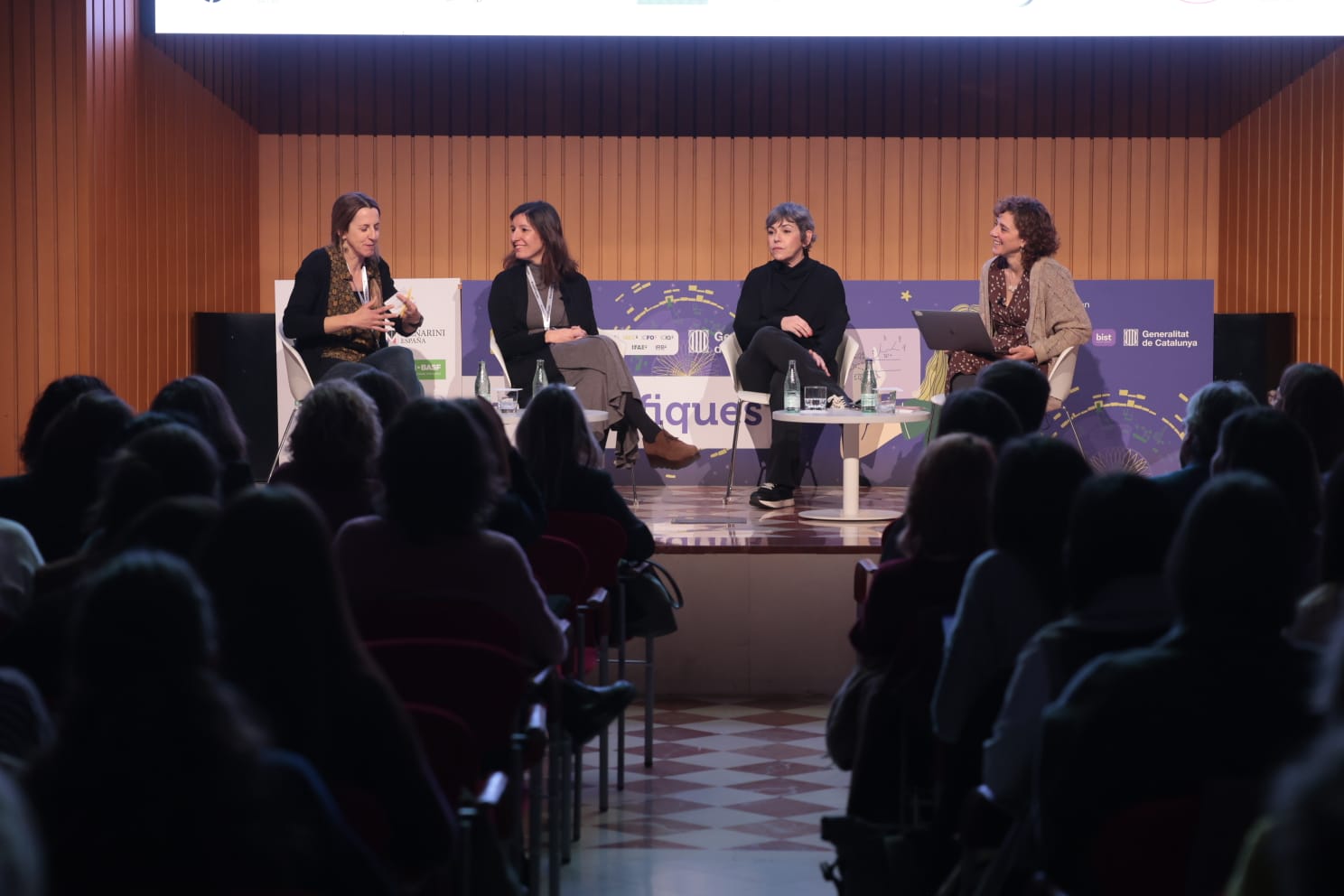
During the round table, speakers shared some of the key findings from the study "Participation of women scientists as expert sources in the media: motivations and obstacles". The results show that women researchers are more often questioned about their professional and scientific competence, while personal attacks are directed mostly at men. The report also notes that work–life balance remains a major barrier to women’s participation in the media and that, despite progress, in 2025 women accounted for only 30% of expert voices worldwide. This lower visibility affects both their careers and the creation of scientific role models in society. As for motivations, both men and women agree that engaging with the media is part of their job, but men more clearly perceive that it can benefit their careers. In this regard, Dr Sandra Acosta noted: “We are aware that appearing in the media to explain the science we do benefits our careers, but we are also aware that being ambitious women, or acknowledging that we want it to benefit our careers, can penalise us."
This is the eighth edition of #científiques. Since it began, the initiative has involved more than 2,260 women researchers and reached over 140,000 primary and secondary school students across Catalonia. This year, Dr Ana Fernández-Arcos, neurologist and researcher in BBRC’s Clinical Research and Risk Factors for Neurodegenerative Diseases group, will take part with an outreach talk which she will deliver at Escola Trinitat Nova on 10 February. This year, more than 570 women scientists have signed up to the initiative to give talks at schools across Catalonia.
You can watch the opening event here.